

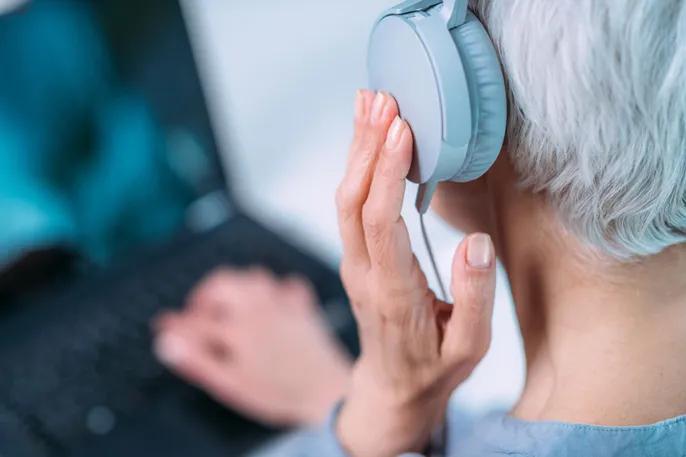
online hearing test
Hearing loss often sneaks up on us. You might notice people mumbling, turn up the TV, or ask others to repeat themselves — small signs that pile up. Online hearing tests have exploded in popularity because they’re free, fast, and available 24/7. But how useful are they? In this post I’ll explain what online hearing tests are, how they work, their strengths and limits, what the research says, and how to act on your results.
What is an “online hearing test”?
An online hearing test is any hearing-screening tool you take through a website or phone app. Tests range from simple questionnaires to interactive hearing checks that play tones or speech and ask you to respond. Major hearing companies and health organizations now offer online screeners to help people decide whether they should pursue a full clinical evaluation. Examples include quick tone/speech-in-noise checkers from hearing manufacturers and independent charities offering a 3-minute screen.
Types of online tests (quick overview)
Pure-tone tests (frequency checks) — tones at different pitches and volumes are played to each ear; you indicate which you hear (like clinical audiometry but uncalibrated).
Speech-in-noise tests — short words or numbers played with background noise to assess how well you understand speech in everyday noisy places. Many online screening tools use this because it’s functionally meaningful.
Smartphone app screenings — apps on phones can run tone or speech tests and sometimes use headphones/earbuds for ear-by-ear checks. Clinical accuracy varies.
Questionnaires/self-assessments — surveys asking about symptoms and daily difficulties; useful for flagging problems but not for measuring thresholds.
How online hearing tests work — in plain language
Most tone-based online tests try to estimate the softest sound you can hear at different pitches (your threshold). Speech-in-noise tests measure how well you can understand short speech tokens with background noise. Apps and websites use these tasks, then convert performance into a simple score or recommendation (e.g., “no sign of problem” vs “see an audiologist”). The mechanics are simple; the tricky part is controlling the test environment and sound levels — more on that below.
Why online hearing tests can be useful
Convenience & access: They remove barriers (no appointment needed) and encourage people to screen themselves earlier. Many organizations use them as triage tools to nudge people toward care.
Cost-free first step: Most are free and can identify obvious hearing loss that warrants professional evaluation.
Public awareness: Widespread, consumer-facing tests (and even features embedded in earbuds or phones) increase awareness and reduce stigma around testing. Recent consumer tech moves have put hearing tools directly in users’ hands.
The important caveats — why they’re not a substitute for an audiologist
Online tests have meaningful limitations:
Calibration & equipment variability. Clinical audiometry uses calibrated equipment and sound booths. Online tests run over unknown headphones/speakers and consumer devices, so dB levels are not standardized — this can skew thresholds.
Ambient noise and testing conditions. Background noise at home may mask soft sounds and worsen apparent hearing, or cause inconsistent results.
No diagnostic scope. Online tests can screen for the possibility of hearing loss but cannot determine type (conductive vs sensorineural), medical causes (earwax, infection), or more complex auditory processing issues. A full clinical workup includes physical exam, diagnostic audiometry, and sometimes medical imaging or referrals.
User factors and test design. How a user responds (attention, comprehension, single-button responses) and how the test interprets responses influence accuracy. Some tests are better validated than others.
Because of these issues, reputable clinicians and health sources consistently recommend treating online screens as preliminary tools, not final diagnoses.